
How to Overcome Fear of Hell After Leaving Christianity
Why the Fear Persists and How to Find Lasting Freedom
Melissa hadn't believed in hell for nearly five years when she woke up at three o'clock one morning with her heart racing.
The thought arrived before she was fully awake.
"What if they're right?"
Within seconds, her pulse was pounding, her stomach tightened, and sleep became impossible. She tried talking herself through it. She reminded herself of the books she'd read, the history she'd studied, and the reasons she no longer believed the doctrine made sense. None of it seemed to matter. She understood intellectually that she was safe, yet her body continued sounding the alarm.
By breakfast the panic had faded, replaced by embarrassment. She couldn't understand why a fear she no longer believed still had the power to terrify her.
If you've ever had an experience like this, you're in good company.
Fear of hell is one of the most common concerns people bring to religious trauma counselling. It often lingers long after belief has changed, leaving us feeling caught between two worlds. We may have moved on intellectually while continuing to react emotionally to messages our nervous system learned years, or even decades, earlier.
The encouraging news is that this experience is common and the fear can diminish. Understanding how deeply fear can become conditioned also helps explain why healing usually happens gradually.
Why Fear Can Outlast Belief
Most of us assume that changing our beliefs should immediately change our emotions. It seems perfectly reasonable. If we no longer believe something is true, why would it continue affecting us?
Our brains don't always work that way.
Imagine someone who was bitten by a dog as a young child. As an adult, they know most dogs are friendly. They may even own one themselves. Yet if a large dog suddenly runs toward them, their body may tense before their thinking brain has time to evaluate the situation. Years later, their nervous system can still remember the danger it learned to associate with dogs.
Fear of hell often develops in much the same way.
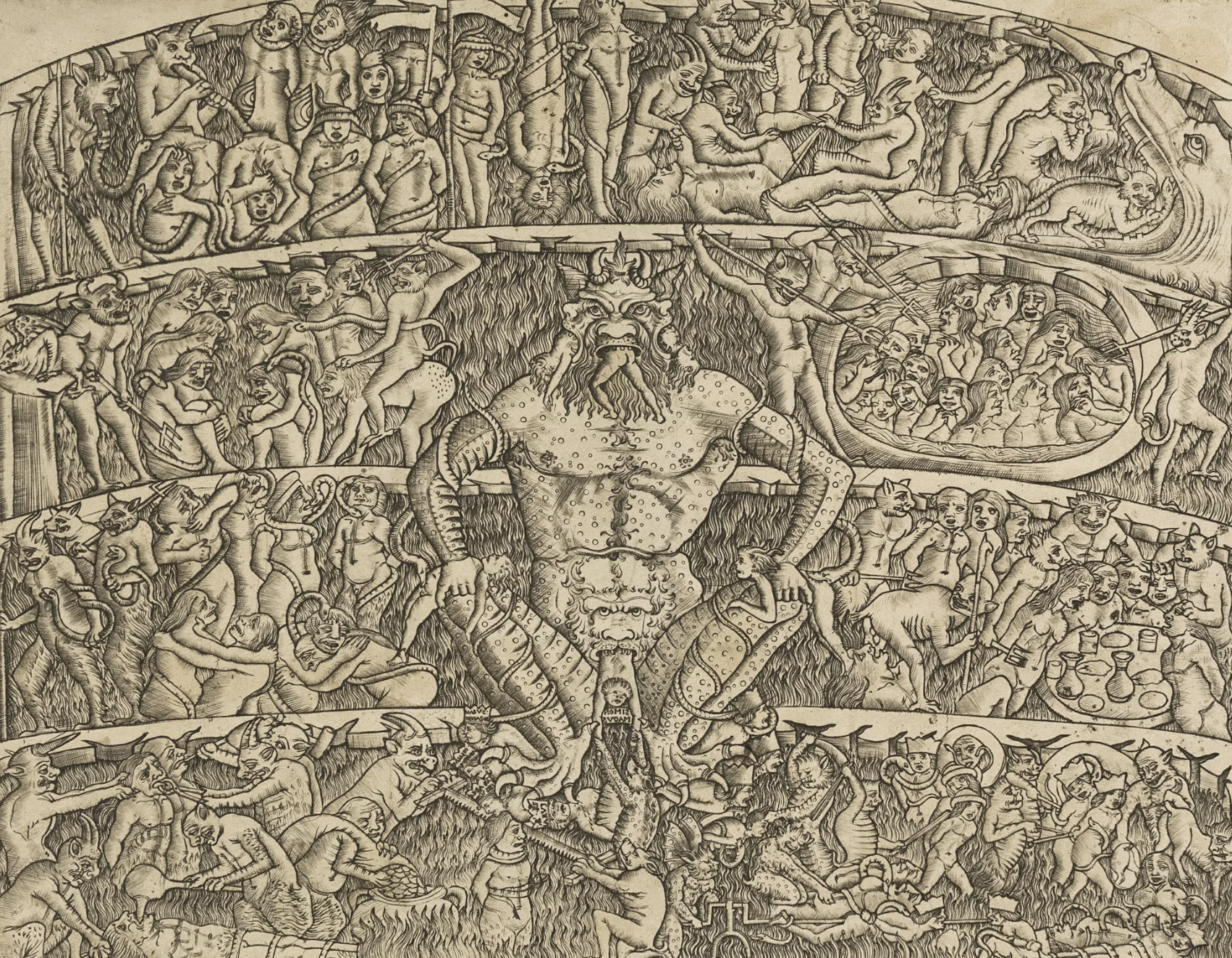
Children raised in fear-based religious environments are repeatedly taught that questioning the faith carries eternal consequences. Those messages may be reinforced through sermons, Sunday school lessons, family conversations, books, music, movies, altar calls, and sometimes vivid descriptions or illustrations intended to encourage obedience. During childhood, when parents and trusted adults are our primary source of information about the world, those teachings can become woven into our understanding of safety itself.
Years later, even after our beliefs have changed, the nervous system may continue responding as though the danger were still present. Your brain may have learned to associate doubt with danger during some of the most important years of its development, and those associations can persist long after the underlying belief is gone. Understanding how that happens can bring tremendous relief and help us view these reactions with greater compassion.
Why Logic Doesn't Always Calm Anxiety
One of the most frustrating parts of recovery is discovering that knowledge and emotion don't always travel at the same speed.
You may understand the history of the doctrine of hell. You may know that different religions describe entirely different afterlives and that billions of people have lived meaningful lives without believing in the version of hell you were taught. You may even be able to explain, in great detail, why you no longer accept the theology.
Even so, your body may still respond with fear.
That disconnect often leads people to become impatient with themselves. They wonder why they can't simply think their way out of anxiety. If the doctrine no longer makes sense, surely the fear should disappear too.
Emotional conditioning often takes more than information to undo. Fear that developed through years of repetition usually softens through repeated experiences of safety. Intellectual understanding may come relatively quickly, while the nervous system often needs more time to learn that the old threat is gone. Many people describe this as knowing they're safe intellectually while still waiting for that sense of safety to feel real.
Fear Was Never Just About Hell
One of the most important discoveries people make during recovery is how many other fears became attached to the idea of hell.
For many of us, hell represented something much larger. It was tied to losing God's love, disappointing our families, being rejected by our church community, or becoming the kind of person we'd been warned about since childhood. Fear of eternal punishment often became intertwined with fear of making mistakes, trusting ourselves, disappointing authority figures, or stepping outside the boundaries that once defined belonging.
When those associations develop over many years, everyday experiences can unexpectedly reactivate them. Reading a book on evolution, attending a secular wedding, declining an invitation to church, or even enjoying life outside religion can trigger anxiety that seems wildly out of proportion to the situation itself. These experiences can touch the same emotional network that once connected questioning with danger.
Seeing these patterns clearly helps us respond with greater compassion. We can begin recognizing these reactions as understandable consequences of spending years in an environment where fear shaped behaviour, belonging, and our sense of safety.
Why Certain Situations Bring the Fear Back
Many people notice that fear of hell doesn't remain constant. It tends to reappear during particular seasons of life.
Illness, funerals, serious diagnoses, religious holidays, family gatherings, natural disasters, and major life transitions can awaken old conditioning. Sometimes the trigger is surprisingly ordinary. A familiar worship song playing in a grocery store, the smell of an old church building, or hearing someone quote a Bible verse can transport us emotionally back to a much earlier chapter of our lives.
Recognizing these patterns is one of the first steps toward healing. We can begin noticing the circumstances that tend to activate old fears and understand why anxiety sometimes seems to appear "out of nowhere." Awareness may not make the fear disappear overnight, but it can make the experience far less mysterious. Understanding these reactions also makes it easier to recognize them as part of recovery rather than evidence that we're moving backward.
One of the quieter lessons of recovery is learning that old fears sometimes visit us without being invited. Their occasional return matters less than the power they still hold when they arrive. As that power diminishes, we begin to see just how far we've come.

Ready to untangle old beliefs and rebuild a life that fits you?
The ULTIMATE Deconstruction Guide & Workbook is your compassionate, step-by-step companion through the messy, beautiful work of questioning faith, healing from harmful doctrines, and discovering who you are beyond religion.
Created by Master Practitioner Clinical Counsellor and religious trauma specialist Janice Selbie, this workbook brings together powerful exercises, grounded psychology, and practical tools to help you release fear, reclaim your voice, and grow into your truest self.
Whether you're just beginning to question or are already deep in the wilderness of deconstruction, you will find clear guidance, encouragement, and a path forward you can trust. You don't need to navigate this alone.
Open these pages and take your next step toward clarity, freedom, and a life built on your own values.
Your healing starts here.
Why the Fear Persists and How to Find Lasting Freedom: Looking at the Bigger Picture
One exercise I sometimes encourage clients to try is gently widening their perspective. This isn't about dismissing religion or persuading anyone to adopt a different worldview. It's simply an invitation to step back and notice that the beliefs we inherit are only one part of a much larger human story.
Christianity is not the only religion that teaches consequences after death. Throughout history, cultures around the world have developed remarkably different ideas about what happens when we die. Some traditions describe reincarnation, others speak of multiple heavens or spiritual realms, and still others imagine entirely different forms of judgment or renewal. Every one of these traditions has sincere followers who are convinced their understanding is true.
That broader perspective can be surprisingly grounding. If fear alone proved a belief was true, we would have to accept every religion that threatened frightening consequences. Most of us quickly recognize that this would be impossible. Fear is a powerful emotional experience, but it isn't reliable evidence that a particular claim reflects reality. Understanding that distinction helps loosen fear's grip without requiring us to mock or dismiss the beliefs of others.
Understanding the History Can Be Surprisingly Reassuring
One of the most encouraging moments in recovery often comes when people begin learning about the history of the doctrine of hell. Many assume the version they grew up with has always existed in exactly the same form. Discovering that the story is much more complex can be both surprising and deeply comforting.
The modern evangelical picture of eternal conscious torment did not simply appear overnight. It developed over centuries through changing interpretations, theological debates, cultural influences, translation decisions, and evolving understandings of scripture. Christians themselves have never held a single, unanimous view. Throughout history, thoughtful believers have interpreted passages about judgment, punishment, and the afterlife in very different ways.
Learning this history doesn't tell you what you should believe. Instead, it reminds us that doctrines have histories, and histories are often more complicated than we were led to believe. For many former Christians, that realization softens the feeling that the version they inherited was the only possible interpretation. Once the doctrine becomes something people have debated rather than something everyone has always understood the same way, fear often begins losing some of its certainty.
Helping Your Nervous System Feel Safe
Because fear of hell is stored emotionally as well as intellectually, healing usually involves more than changing beliefs. The goal isn't simply to convince yourself that you're safe. It's to help your nervous system experience that safety in real time.
When anxiety appears, try noticing what's happening in your body before arguing with the thoughts in your mind. You might slow your breathing, feel your feet against the floor, or look around the room and remind yourself where you are today rather than where you were years ago. These simple grounding practices may seem almost too ordinary to matter, but they're often far more effective than trying to reason your way out of panic while your nervous system is convinced there's an emergency.
This is one of the reasons healing often requires patience. The frightened part of your brain isn't looking for a theological debate. It's looking for reassurance that the danger has passed. Each time you respond with calm curiosity instead of panic, you're teaching your nervous system something new. Little by little, it begins learning that questioning, uncertainty, and independent thinking no longer place you in danger.
Recovery Rarely Moves in a Straight Line
One of the most discouraging moments in recovery is when fear suddenly returns after months of feeling fine. Many people immediately assume they've gone backwards or that they secretly believe again. In reality, temporary setbacks are a normal part of almost every healing process.
Think about recovering from a physical injury. There are days when everything feels strong and steady, followed by mornings when an old ache unexpectedly returns. We rarely conclude that the injury never healed. Instead, we recognize that recovery unfolds gradually and that occasional discomfort doesn't erase the progress we've already made.
Emotional healing often works the same way. Most people notice that episodes of fear become less frequent, less intense, and much easier to navigate over time. Progress isn't measured by whether anxiety ever visits again. It's measured by how differently we respond when it does. Instead of feeling trapped by fear, we begin recognizing it as an old pattern that no longer has the final word.
Building a Life Beyond Fear
Eventually, something remarkable begins to happen. You realize you're spending less time trying to prove hell doesn't exist and more time thinking about how you want to live.
That shift is easy to overlook, but it's one of the clearest signs of recovery. Your attention gradually moves away from avoiding punishment and toward building a meaningful life. Relationships become more important than arguments. Curiosity becomes more interesting than certainty. Instead of asking, "How do I make this fear disappear?" you begin asking, "What kind of person do I want to become?"
Fear has a way of making our world smaller. It encourages us to avoid, withdraw, and remain hypervigilant. Healing gradually reverses that process. As fear loosens its grip, life begins expanding again. We become more willing to learn, travel, build relationships, explore new ideas, and imagine a future that isn't organized around avoiding eternal consequences.
Perhaps that's one of the greatest gifts of recovery. Freedom isn't simply the absence of fear. It's having enough space to invest your energy in the life that's unfolding right in front of you.
You Don't Have to Face This Alone
Fear of hell can feel deeply isolating because it often seems irrational to the person experiencing it. Many former believers hesitate to talk about it because they're embarrassed by how powerful it still feels. They may worry that others will assume they secretly believe again or tell them they simply need to "get over it."
The reality is much more compassionate than that. Fear reflects the remarkable way the human brain learns through repetition, emotion, and early experience. If teachings about eternal punishment were repeated throughout your childhood, it makes perfect sense that your nervous system might continue responding long after your beliefs have changed. There is no shame in acknowledging that those early lessons left a lasting impression.
Working with someone who understands both religious trauma and the psychology of fear can make a tremendous difference. Together, we can untangle old conditioning, strengthen trust in your own thinking, and help your nervous system gradually learn what your rational mind may already understand: you're safe. Healing isn't about forcing yourself to stop feeling afraid. It's about replacing fear with understanding, self-compassion, and confidence that you can navigate life's biggest questions without surrendering your autonomy.
Ready to Leave Fear Behind?
If fear of hell continues to shape your thoughts, relationships, or sense of wellbeing, you don't have to work through it alone. Whether these fears appear every day or only during seasons of stress, they deserve understanding rather than judgment. Recovery is possible, and you don't have to rush it. Like any deeply learned pattern, fear softens through patience, practice, and support.
I'd be honoured to walk alongside you as you rebuild a life guided by curiosity instead of fear. Together, we can explore the beliefs you inherited, understand why they continue to affect you, and develop practical, evidence-informed strategies that support lasting freedom.
Book a free consultation to learn whether working together feels like the right fit, or join my free weekly online support group to connect with others who understand what it means to rebuild life after religion.